

The Call
The call I have been anticipating for twenty-four years came in at 5:41am Pacific Time on July 7th, 2026.
“Russ, it’s your Mom. Are you on your way to work?”
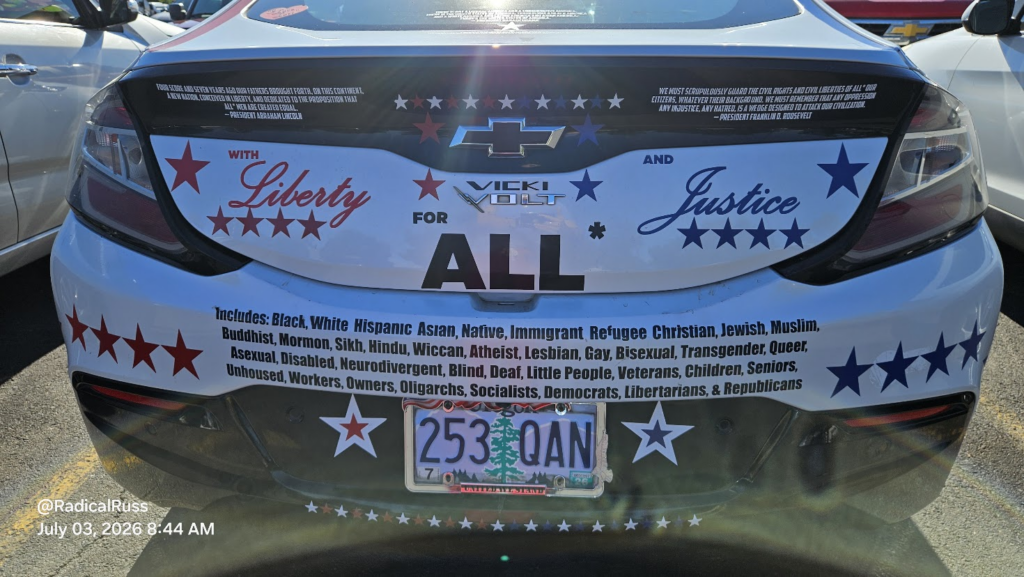
I was. Every day, I awaken at around 5:00am, quickly dress, and get into my Star-Spangled Chevy Volt to drive 22 miles down the mountain into Grants Pass, Oregon. Every day, I work gig apps, mostly the Spark app that provides shopping and delivery services for Walmart, Home Depot, and others. Every day, I do this for ten to twelve hours straight, with a $1 soda refill and two-for-$1 donuts left over from the day before at the AM/PM for breakfast and a $2 Taco Bell cheesy bean & rice burrito for lunch while I’m making the deliveries.
Every damn day. Because there is no paid time off, no vacation time, and no sick leave with gig apps. Because I’m burdened with way too much debt from one business disaster after another in the past decade. Because nobody is hiring guys with a Google footprint that screams “pothead!” who are nearing sixty and whose last W-2 job was during the Bush Administration.
“Yeah, Mom, just heading down the mountain. What’s up?”
I already knew what was up. A call this early from Mom can only be one thing.
“Well, it’s your father…” she began and I really didn’t follow the rest until she got to “…and he’s unresponsive.”
Dad’s not been healthy. He’d had a life-threatening health scare at the turn of the century. When we threw him a 60th birthday bash in 2002, we planned it as if it could be his last. When I left for Portland, Oregon, the next year, I knew someday I’d be getting this phone call and planning my pilgrimage back to Idaho for my father’s last rites.
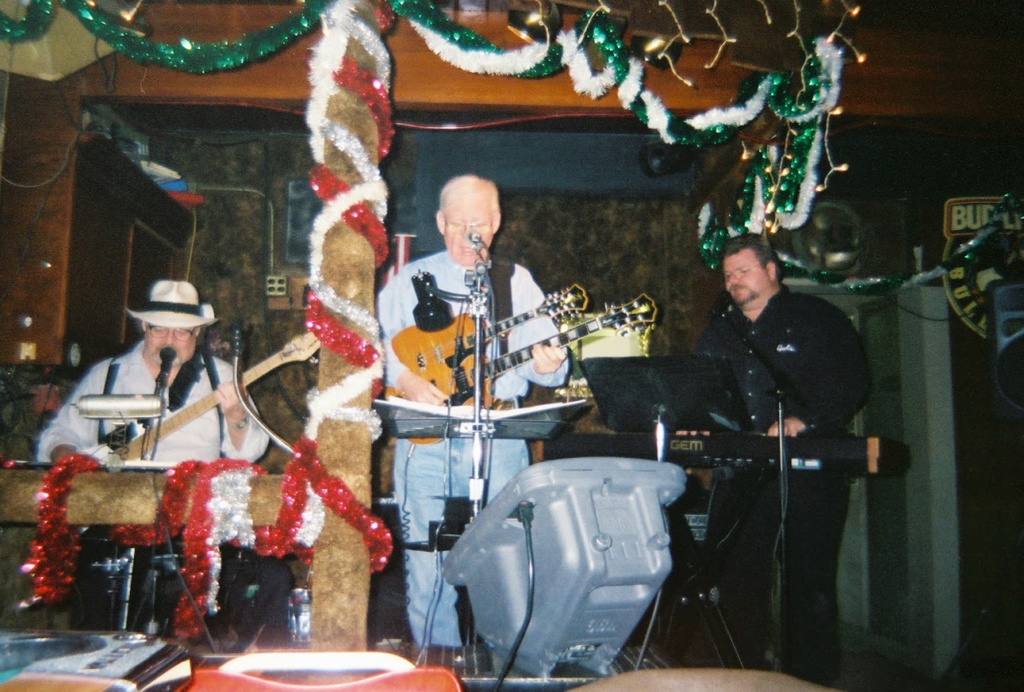
But that call never came. Dad’s health improved, but it was a bit of one step forward, two steps back. He’d gotten an arterial stent for his legs and regained circulation and feeling. But then he’d developed some sort of throat cancer and they had to operate to cut it out. He’d improved his blood sugar enough to no longer be diabetic. But his kidneys were only operating at thirty percent efficiency. He managed to drastically reduce his use of opiate painkillers through using medical cannabis, illegal though it is in Idaho. But damage to the nerves in his feet left him unable to play drums and made walking difficult. That was the general cycle of health news I’d receive when I’d call or visit.
Mom was still talking, assuring me that everything was okay with her, that she had my eldest niece coming by to help her. “Now don’t you go thinking you have to come drive across the state,” she was telling me. “I know you’ve got to work to take care of Lori and the little ones.”
Lori is my ten-year ladylove with whom I share a 37-foot RV trailer with three tip-outs that gives us 360 square feet of living space in three rooms. We live in the mountain hideaway of Wolf Creek, Oregon, which is a small hernia of the old Highway 99 that loops off of Interstate 5 at exit 76. It’s known for the Wolf Creek Tavern that was a stagecoach stop between Portland and San Francisco and its famous guests, such as author Jack London.
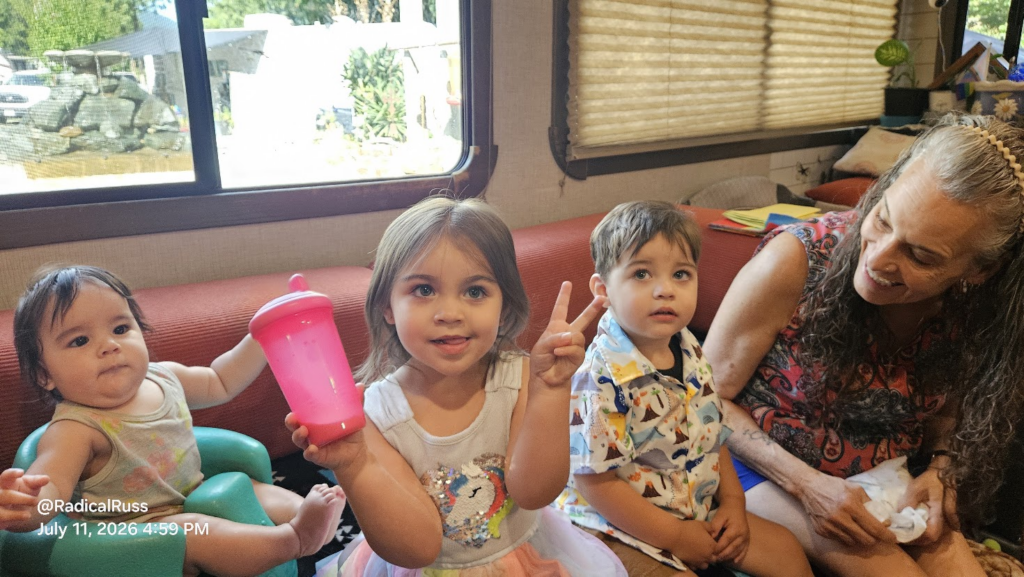
Lori’s a disabled grandmother and great-grandmother whose only income is Social Security disability payments enough to cover the cost of living 22 miles up the mountain from Grants Pass. I work to cover the costs of everything else, which for the past ten weeks has also included caring for three of her great-grandchildren (ages 3½, 2, and 6 months) because her grandson and his wife became suddenly homeless. If I work for sixty to seventy hours every week, I can keep us current on all the bills.
Have you seen how expensive baby formula is? Are they making it with cocaine? It’s about another 90 minutes of work per week to afford. Did I mention the 360 square foot trailer also houses four chihuahuas and a cat?
We spoke for three minutes and twenty-five seconds. I told Mom I loved her and to keep me updated on Dad. With fifteen minutes before the Walmart was to open and gig requests already coming in, I hadn’t really processed what “he’s unresponsive” meant in that call.
I got to the AM/PM, grabbed my soda refill and last night’s donuts, and then across the street to Walmart. It was a nice morning gig, a pickup order with two deliveries. Both short distance, which is a relief.
My Star-Spangled Chevy Volt isn’t entirely reliable. She runs fine on the plug-in electric side, which supplies me 40 miles of battery power. But when it is time to be in hybrid gas/electric mode, there is an intermittent, unpredictable, unreproducible problem with the exhaust system that gives me a warning of “Engine Not Available” and “Propulsion Power Reduced” which lasts for however long I still have battery power left before the car becomes a brick. The remedy for this error, as is with many things computerized, is to turn the damn thing off and back on again, but only after waiting five minutes. Not three. Not four. At least five minutes. Then you can turn the car on and she runs just fine. Almost always.
This is one of many things I took the Volt in to the mechanic to have fixed, and to his credit, many of the things were fixed. Except that whole every-now-and-then-you-have-no-engine thing. While the car was being fixed, I had to use Lori’s GMC Acadia to do my work, which gets half the gas mileage, thus, my operating costs doubled and I took home less pay and fell further behind. But when the gas prices shot up in March, the gas costs of working in the GMC became greater than the weekly cost of paying off a service loan to fix the Volt, which figures to be about an extra twelve hours work per week through September.
While I’m out delivering the orders, more of what Mom had said on the call was filtering up to my conscious. Dad fell last night? The paramedics helped him get back into his bed? “He was fine talking to them, lucid, but then every now and then he’d say something where you’d go, ‘what?’,” Mom had explained.
Oh my god, my Dad is going to die.
At 7:02am, there’s another Walmart pickup delivery, It’s headed up to Glendale, which is a couple exits farther north from Wolf Creek. I can make that delivery and stop back at home on the way to pick up clothes and toiletries for a stay back in Idaho. I’m texting with Lori the whole time. At first, I’m still entertaining the idea of working the rest of the day and staying in touch with Mom via phone. Lori, a former hospice nurse, tells me I must go and be with my Mom. I protest that my car will never make it the 500 mile drive across barren Eastern Oregon, and I can’t take her car because she can’t get the car seats in my car. Lori persists. “You need to be with your Mom.”
After leaving home I’m running numbers in my head. The trip there and back will take four gas tanks, that’s $140. I can crash at a friend’s place in Nyssa, so no hotel costs. I’m sure Mom will have something to eat. I’m going to lose $350 to $400 from not working on the two driving across Oregon days. While I’m there I can work the Ontario Walmart, maybe just in the early morning, maybe make $100, and then go be by Mom and Dad’s side.
My mind reeled. My father is lying on his deathbed, breathing his last breaths. I’m eight hours away, if my car doesn’t break down on the trip, and I’m trying to figure out how to squeeze in a few extra hours of independent contracting with no benefits or job security for a multibillion dollar corporation so that attending my father’s last moments doesn’t further bankrupt me.
At 8:30am, as I approach Grants Pass, a request comes up on another gig app, Roadie. A pickup from Tractor Supply headed to east of Eagle Point. That’s actually exactly the route I need to go to head east across Oregon. I take the delivery for the $34 wage. It adds about twenty extra minutes to my trip. I hope Dad holds out.
The Drive
The route from Southern Oregon to Southwestern Idaho is not a direct one. It takes you across state highways, then county roads, and even some plain old roads, through some of the least-populated places in the United States. From Wolf Creek, Oregon, to Nampa, Idaho, is scenically like driving a lifetime. You begin in young, green mountains with teeming whitewater rivers, highways lined with tall, pointy green trees backed with occasional white mountain peaks. As time and miles move by, the peaks and valleys level off, the trees a bit shorter, the hills a bit browner. Soon, you’re in winding roads through rocky canyons, the trees now even shorter and round, until you find yourself staring at miles of rolling hills and sagebrush that eventually give way to the irrigated fields and urban development of Idaho’s Treasure Valley.
As I drove those roads, I awaited another call. The call that would tell me I hadn’t made it, that Dad had passed. Then there was the dread of the areas with no cell reception, not knowing if that call was trying to be made, anxiously looking for bars and incoming message alerts to tell me of the bad news I’d missed.
Surprisingly, my Star-Spangled Chevy put in a heroic effort. Not a single hiccup in four hours of driving. Around 12:30pm I stopped at the little town of Silver Lake to get a drink and pee. I checked in on our family chat. My eldest niece, Sam, was there along with the hospice nurses. They were getting Dad medicated with morphine. He was still with us.
Next stop, Riley Sinclair. No, not my future fictional detective protagonist’s name. It’s a gas station in the town of Riley, which is where US 395 meets US 20, a good halfway point to fill up on the route. But before I could get there, the Chevy had a hiccup. I had to stop in the middle of nowhere with zero cell reception and wait the five minutes before trying again.
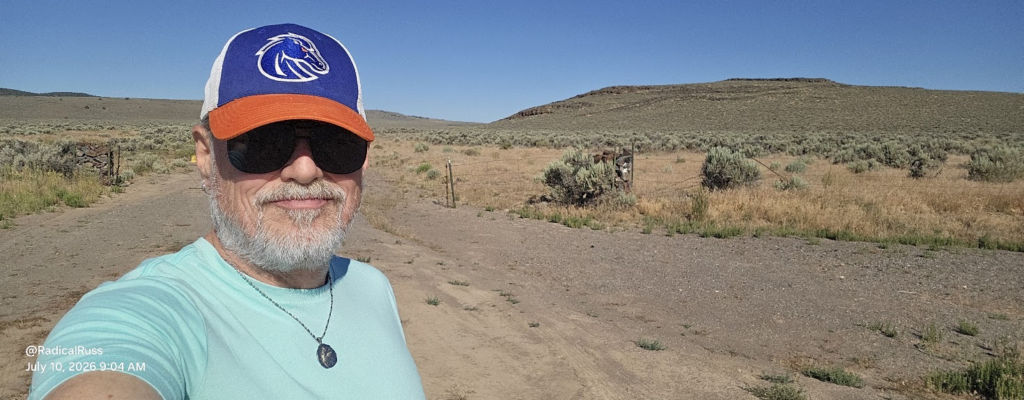
There, in the silence and grandeur of the wide-open range somewhere in Harney County, it all hit me and I began weeping. My Dad’s gonna die and I might miss it. What if I miss it by the five minutes this car takes to reboot? Or the extra twenty I added to make $34? Or the extra hour working then going back home instead of not just starting across the state with the clothes on my back at 5:41am when Mom first called?
Thankfully, the Chevy rebooted as if there had never been a problem. We made it to Riley Sinclair, gassed up, and continued on toward Idaho.
The Music
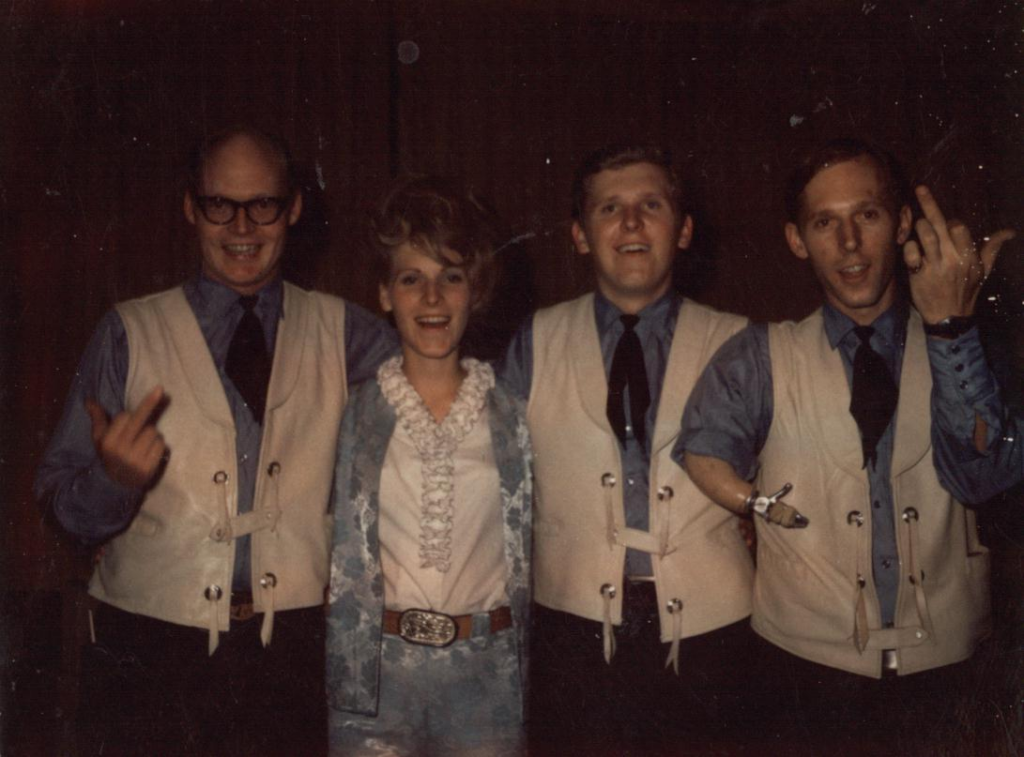
Throughout the drive, I listened to two SiriusXM stations in areas where I had cell reception (I had to give up the car subscription to save money)—Willie’s Roadhouse and The Elvis Channel. Dad was a musician and the reason I am a musician. He was a touring drummer in the 60s and 70s, mostly for a country cat named Orville Couch (“Hello Trouble,” Country #5, 1963), but he also backed folks like Dolly Parton and Johnny Cash in one-off gigs. He’s even the studio drummer on some regional hit by a 60s R&B girl group, he didn’t even really remember something I would be embossing on business cards.
It’s weird how many classic country songs I know all the words to. Many of them are the covers Dad used to play in various bands that I heard him perform so many times that I had memorized all the bandstand patter and bar jokes he’d throw in among them. I’d listen to those Willie’s Roadhouse tunes until one would make me cry too much (“For the Good Times,” Ray Price, Dad’s closing song, complete with the “It’s last call, folks, and hotel/motel time. You’d don’t have to go home, but you can’t stay here. If you don’t work here, sleep here, or sleep with someone who works here, it’s time to head for the doors.”).
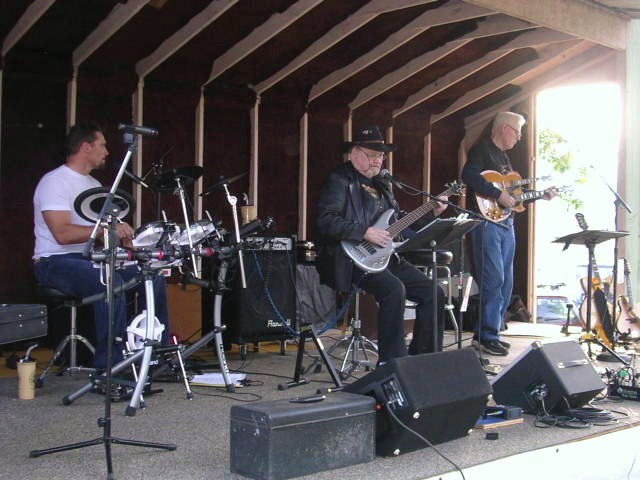
Then I’d flip to the Elvis Channel. Oh, Dad loved The King. Dad was twelve years old when Elvis hit the scene. Until that time, music had been more standard sort of fare under the tutelage of his mom, my Grandma Grace. She had been a trained opera singer and taught Dad how to sing harmonies as a child. So when Elvis hit, that’s when Dad knew he was going to be a rock’n’roller. He took up drums in school, began playing in bands, and continued to do so until health problems at the end of the 20th century took the feeling in his feet.
I drove with Elvis and Willie until we hit the no reception zone. Then I fired up my podcast from just eight days prior, featuring the interview with my parents from three days before that. We were just talking less than two weeks ago. Now that interview is the last recording I have of my father. What a good one it is! The one thing he said that kept me going was when he said “it’s all about the memories” when it comes to what is best in life.
(The video of their interview is here: it’s fun watching Dad keep reminding Mom to keep her arms off the table so they don’t make any microphone noise.)
The Memories
Since moving to Oregon in 2003, I hadn’t been around my folks as much as I’d like. My career and my marriage made visitation difficult. I missed not only them but also my nieces growing up. Since my divorce and my relationship with Lori, I’ve been trying to make more of those memories. As I drove I recalled the times we shared in the past decade while trying not to speed too much (is 80mph too much?) and telepathically telling Dad to hold on, I’m on my way.
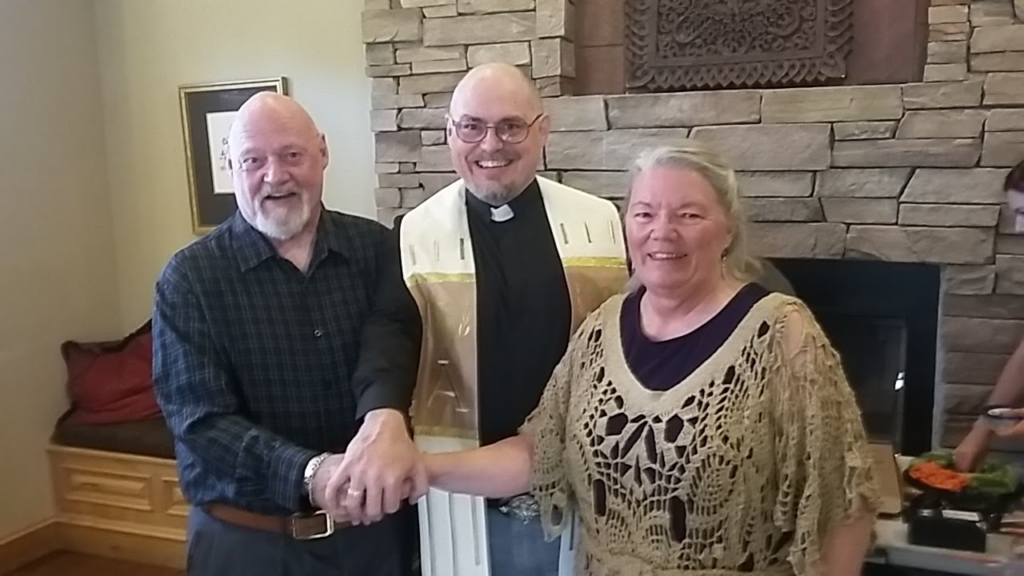
2016: Mom & Dad’s 50th Wedding Anniversary. I got myself ordained as a minister and my folks renewed their wedding vows. There was also a Boise Hempfest where they came to see me speak. Despite some reticence in 2005 when their oldest boy began working in medical marijuana activism in Portland, by 2016 Mom and Dad had come to fully recognize the righteousness of my cause.
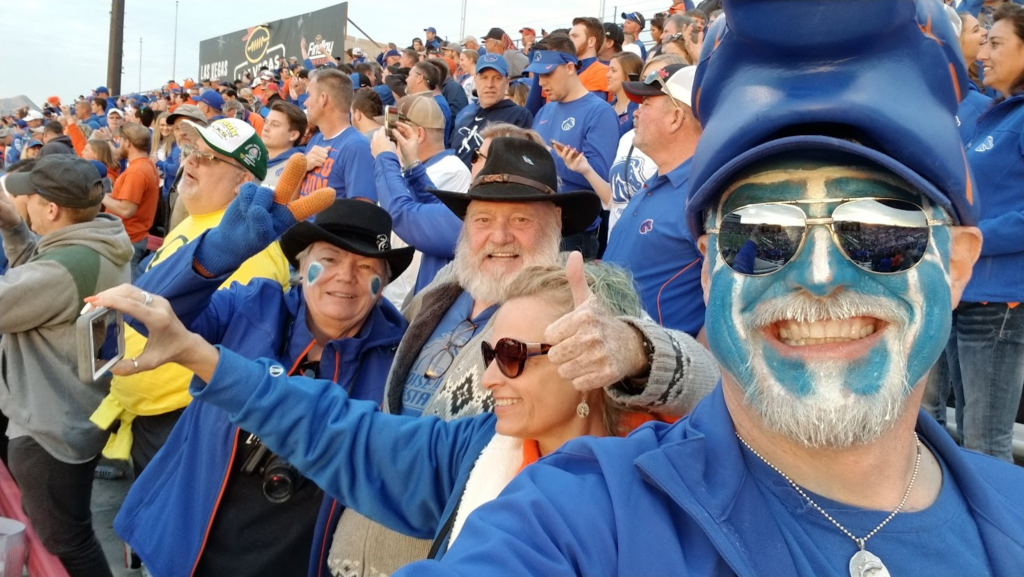
2017: Lori and I flew Mom & Dad to Las Vegas to watch our beloved Boise State Broncos defeat the Oregon Ducks in the Las Vegas Bowl. We also took some time to go to an indoor range and shoot machine guns.
2018: Lori and I move to Ontario, Oregon, and Dad is getting more involved with our medical marijuana campaigns in Idaho. He is thrilled to discover that Democratic gubernatorial candidate Pauline Jordan was supportive of medical marijuana, alluding to her Native American heritage and their cultures’ support of herbal medicines.
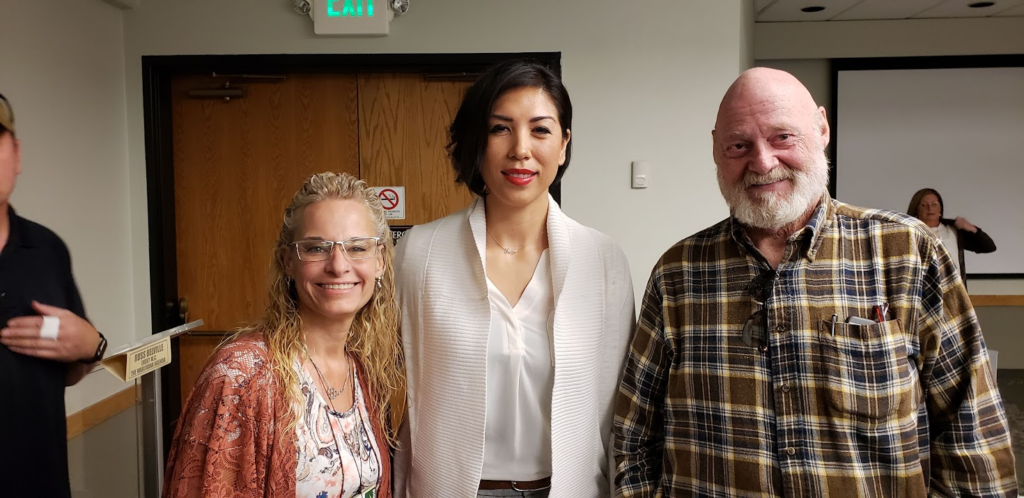
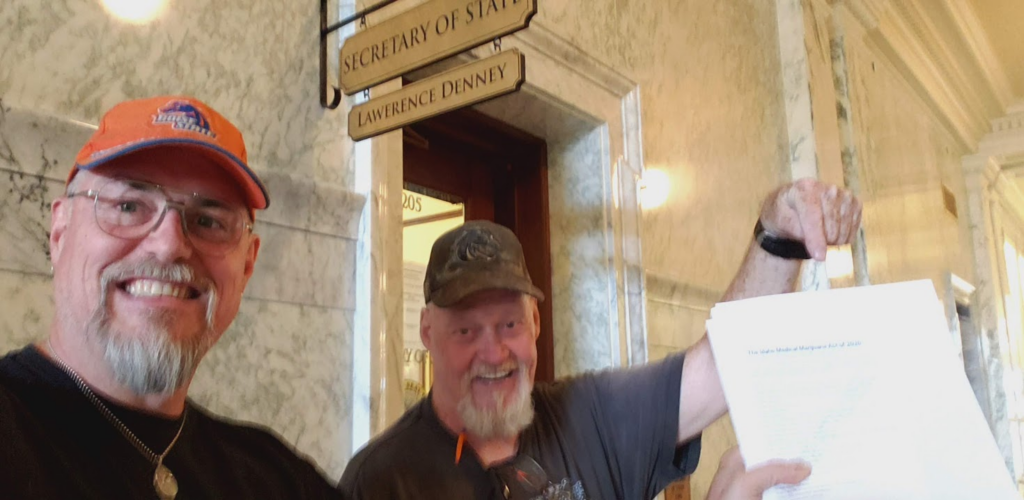
2019: After the 2018 medical marijuana campaign failed, I told Dad he’d be a great chief petitioner—a recovered drug/alcohol addict become drug counselor retired by chronic pain who’s an elderly 3rd-gen Idahoan who loves to hunt and fish. He agreed and became a part of history: the 2020 Idaho Medical Marijuana Act that was derailed by COVID.
That 2020 medical marijuana campaign in Idaho will always be special to me. Dad and I planned a series of stops over seven weekend road trips such that we could say we collected signatures from every county seat in the State of Idaho. There are 44 counties in Idaho, and the state measures 479 miles north to south and 305 miles east to west with a whole bunch of mountains and rivers in between.
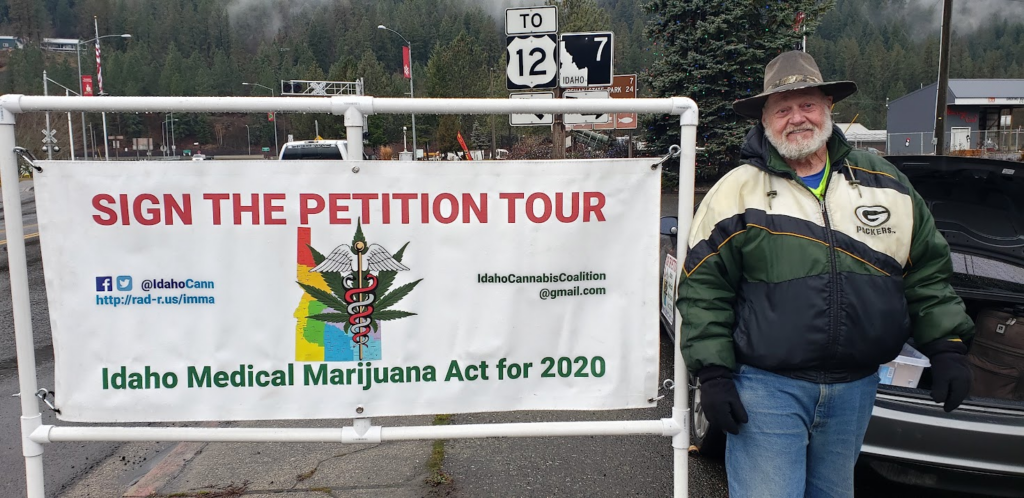
We traveled together in my 2012 six-speed manual Honda Civic Si, which wasn’t the most comfortable rig for him to sit in for hours, but he endured, regaling me with all manner of stories about the various places we were passing by in Idaho. At least fifteen percent of what he told me was based in reality. “See that? The town of Athol. Named after the mayor of the place, was a real asshole, but he had a lisp, you see…” That kind of stuff. He laughed as he thought I was growing irritated by the tales. I was never irritated. I just knew they were bullshit.
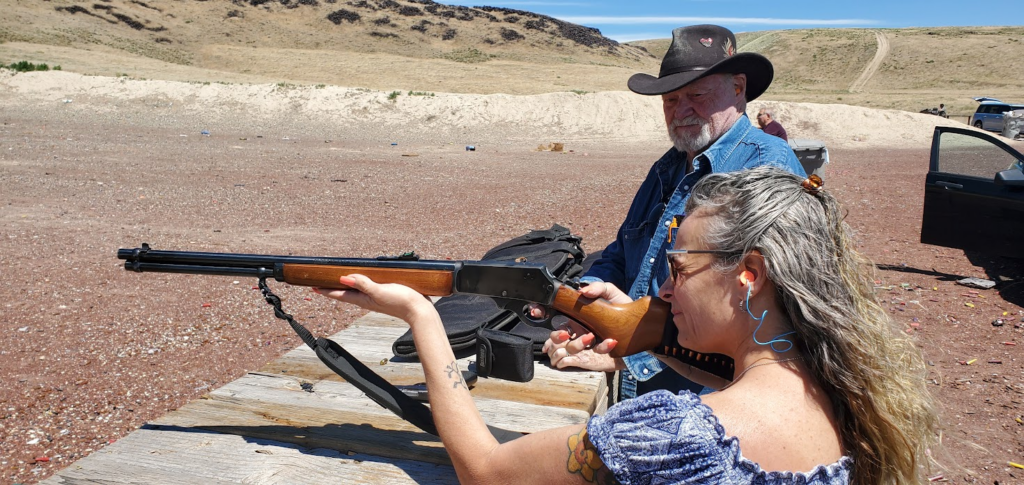
2020: Even with COVID raging, Lori and I found a way to create memories. We brought along her teenage grandkids and we went with Mom & Dad to a public outdoor range in Idaho and shot targets.
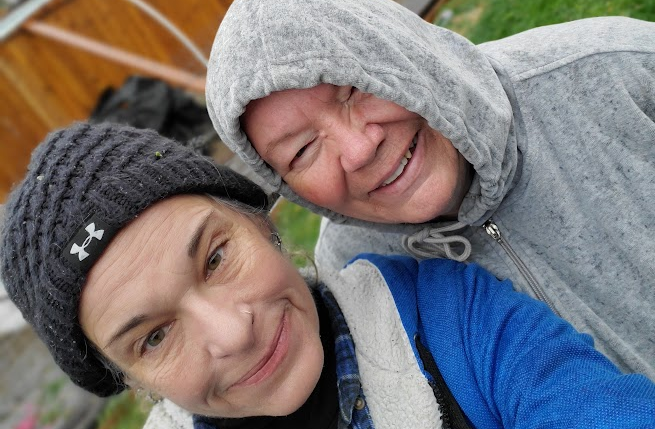
2021: Lori and I are living in Ontario, Oregon, as we work on businesses in Sumpter, Oregon, and Boise, Idaho. Dad wasn’t leaving the house much at this point, but I made a point to visit often. Mom would make the hour drive to our backyard to help Lori with maintaining our medical cannabis garden.
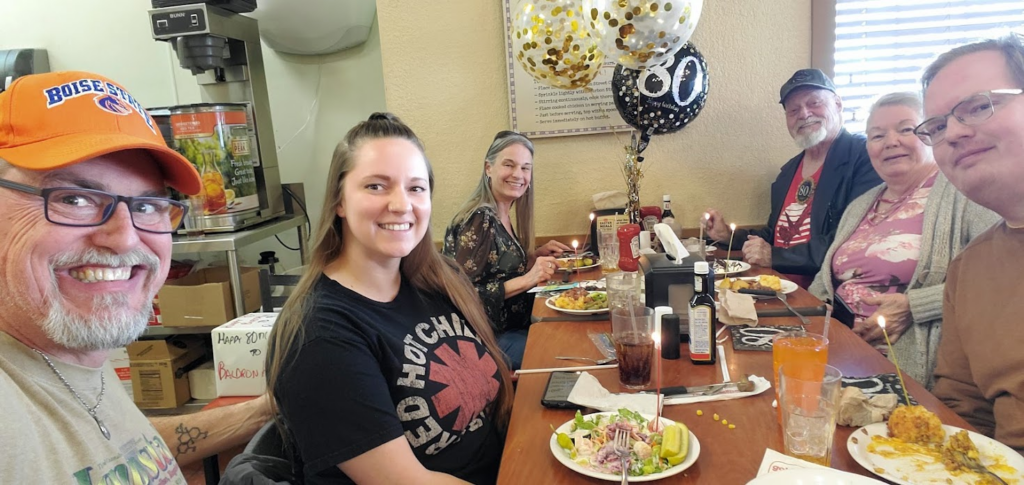
2022: It’s Dad’s 80th Birthday, another one of those milestones nobody would have bet on. Lori and I were living that year in the same RV park as Mom & Dad in Nampa, following our business collapse in Ontario. My brother Josh drove in from Portland, and my eldest niece Sam, who lives nearby. We’re dining at a buffet Dad referred to as “The Golden Trough.”
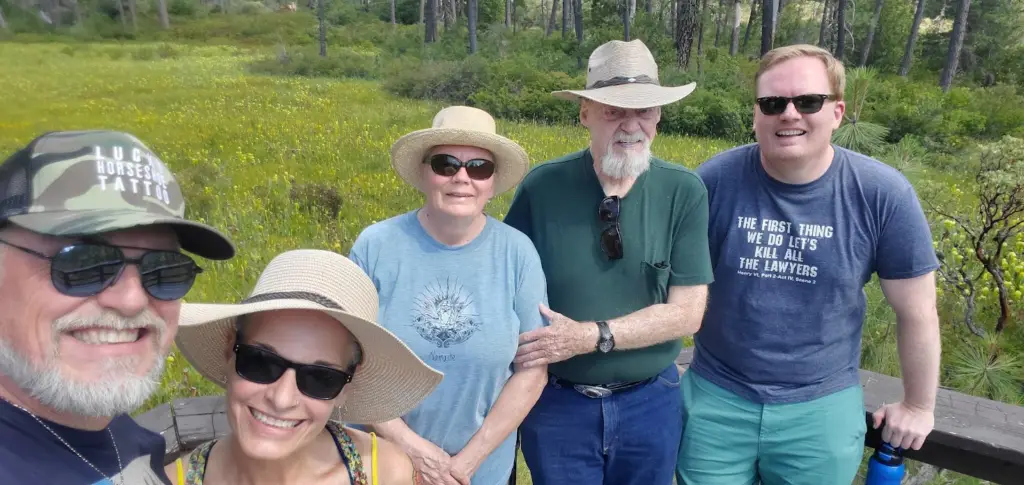
2023: Lori and I have left Nampa and moved to Southern Oregon. Mom & Dad take their summer vacation to see us—Dad’s still driving 500 mile road trips at age 81! We take them to this wonderful boardwalk hiking trail that leads to a vast field of carnivorous pitcher plants. Dad has always loved outdoorsy stuff, but his feet ailments made it tough for him to hike, so the boardwalk was perfect.
2024: We didn’t get to see my folks that year. Lori had to deal with successive deaths in her family back in Louisiana. I had just begun playing music professionally again after a twenty-year hiatus. Dad would watch our livestreams on Facebook and chime in with his opinions of the performances.
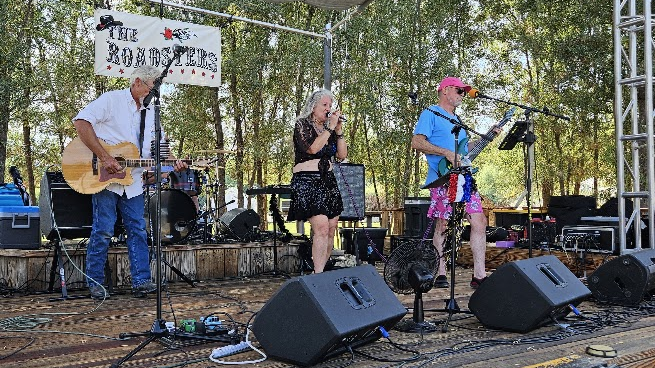
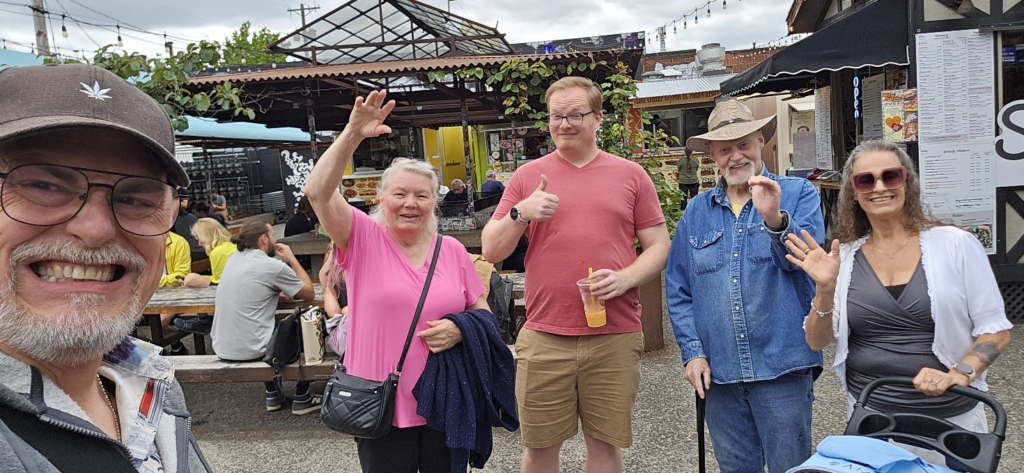
2025: Mom & Dad’s 59th Anniversary, and a road trip (Dad’s still driving!) to Portland to visit my brother Josh. Lori and I drove up to meet them and enjoy all that Portland Food Truck culture has to offer.
2026: Mom & Dad’s 60th Anniversary. They’d planned to visit us in Southern Oregon, but Dad fell ill with anemia a couple weeks before the trip. Doctors suggested driving 500 miles probably wasn’t a good idea, so just two weeks before the event, I rented out a VRBO in Ontario, adding another nine hours a month I’ll have to work for the next two years to pay off.
The Deathbed
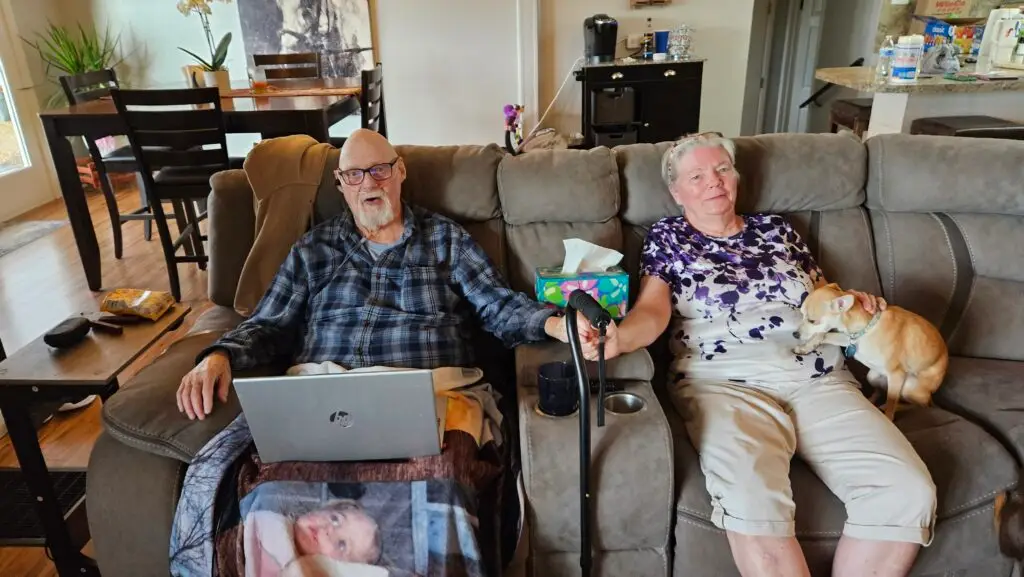
Roughly after 6:00pm Mountain Time, eleven hours and nineteen minutes after Mom’s call, I arrive at Mom & Dad’s motorhome. My niece Sam’s car is parked out front. I rush in and to the bedroom where my Dad is laying on his back. He doesn’t have the oxygen tubes in his nose. He’s breathing in labored gurgling gasps. His eyes are closed but the eyeballs are futtering beneath. He’s in there.
I lay beside him on the bed, tears welling in my eyes. “I made it, Dad. I told you you should’ve drank some of that FlexSeal,” I joked, calling back to my advice a month ago, when he told me of the suspected internal bleed that had led to his anemia and to the cancellation of his 60th anniversary trip out to Southern Oregon.
He knew he was going to die then. The doctors had him in the hospital, cycling through a quart or two of blood to get his counts back up. He had been low in sodium and potassium. If they could just do a colonoscopy, they told him, they could find where it was…
He would have none of it. He was sick of hospitals. He was sick of being cut open. He definitely was not enjoying the colonoscopy prep. “Take me home,” he told Mom. All he wanted was to be at home, with Mom, and make it to the 60th anniversary with his family.
Recently, his last and dearest friend Beatrice had passed suddenly from stroke. His longtime friend and bandmate Henry had passed four years prior. Aside from Willie Nelson, every musician he’d ever played with, covered, or admired had gone. He knew it was his time and he just wanted to go out with some dignity.
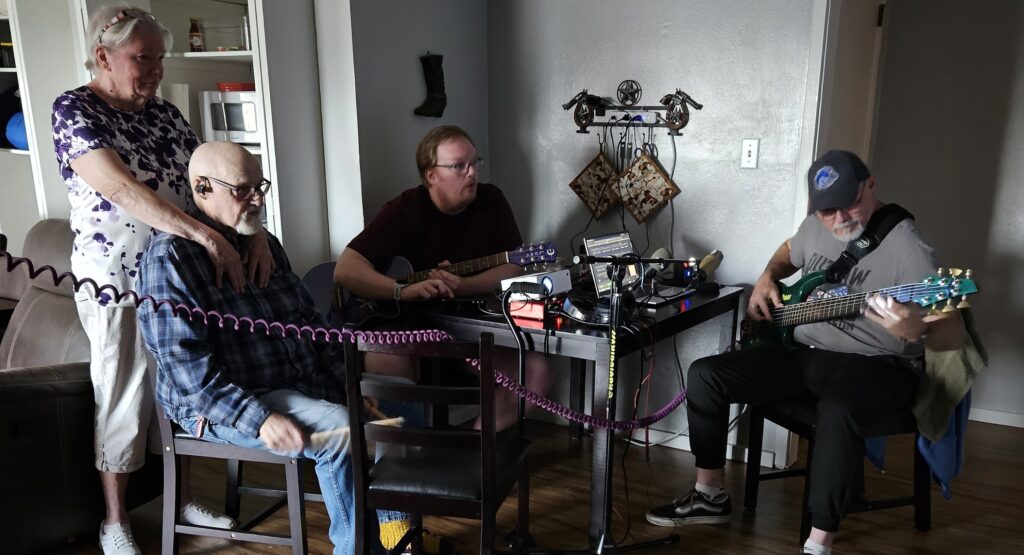
When we held that 60th anniversary out in the VRBO in Ontario, we all felt it could be our last event with Dad. He loved every minute of it. It was a working horse ranch, something he had done as a young boy, so he enjoyed watching the workers put the horses through their paces. Dad grabbed a pair of drumsticks and joined me on bass and my brother Josh on acoustic guitar for some jamming in the basement—I believe the first time the three of us had played together.
While I sat with him, I held his warm, dry hand. I stroked his stubbly bald head. I used a washcloth to help pat the accumulating phlegm he couldn’t swallow from his mouth and tongue. Through it all, I kept talking to him. I told him my brother Josh, his youngest son, was on the way. I told him that I was here and Sam was here and we’re taking care of Mom. I told him to not be afraid and everything was going to be all right.
There was a deep calm that came over me. I reflected on my entire life with him and, for the first time, saw me through his eyes. I never had any children of my own, so these ten weeks of raising Lori’s three great-grandkids are the closest experience I’ve had. Raiine, the 3½-year old girl, is a smart little kid like I was. Judah, the 2-year-old boy, is as energetic as I was. Urii, the infant girl, is the same age difference as my brother Matt is from me.
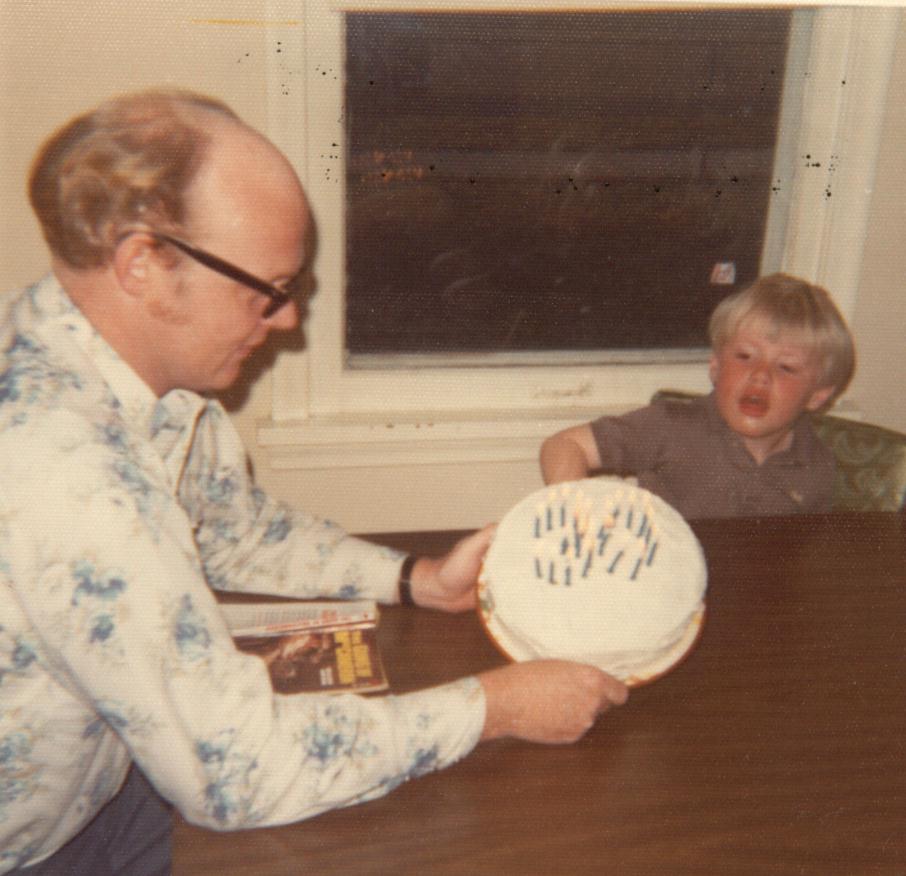
Dad was just shy of 26 years old when I was born and 29 when Matt was born. He was a touring road musician and midway through a raging alcohol and pill addiction. I had my own issues with drugs and music in my twenties and couldn’t imagine raising two kids. Hell, I’m fifty-eight and West Coast sober and am finding it difficult to handle these kids.
But he did. He gave up the road life he loved and the dream of a greater music career when I began school early in 1973. It was a hectic childhood as he tried working various jobs—restaurant manager, appliance sales, mobile home sales—that had me attending a different grade school in a different town every year from kindergarten through 7th grade. I used to resent him for that. Now, I see it as miraculous that he was able to keep working these day jobs and play music at night while battling full-blown addiction.
Most miraculous is that I have near-zero memory of my Dad ever being drunk. Once, at age ten, I remember him stumbling and falling on the sidewalk outside our house. It really freaked me out; Dads don’t fall. I didn’t then know it to be a symptom of drunkenness. I thought he was just clumsy. Another time, around age twelve, I remember him reaching way in the back of the fridge for a can of beer—we never had beer in the house and I never saw him drinking—and admonishing me not to let Mom know he had the beer, or she’d be angry.
Oh, there were the effects of him being a drunk I was aware of. He’d had a couple of rollover DUIs in the 70s, back when drinking and driving was just something you were expected to do carefully, and we had to visit him in hospital beds. I remember once asking if the fluid running into the tube poked into the vein on the top of his hand was orange juice. There were also the times he just wasn’t there, out on a bender for a couple of days or a couple of weeks.
Otherwise, he did a tremendous job, likely at the fierce insistence of Mom, to keep his alcoholism out of our home. So, it was somewhat shocking to me at age 14 when he admitted himself to the Mercy CareUnit, a drug and alcohol rehab in Nampa.
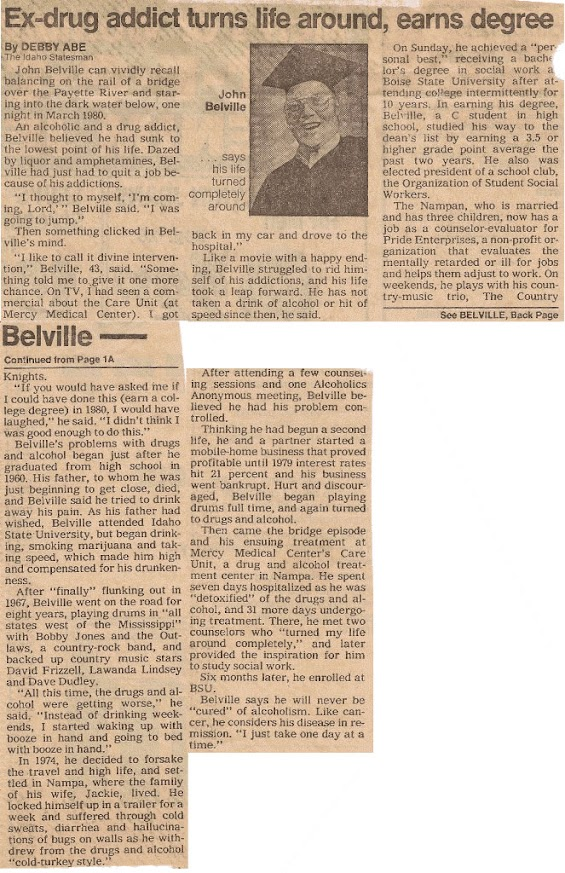
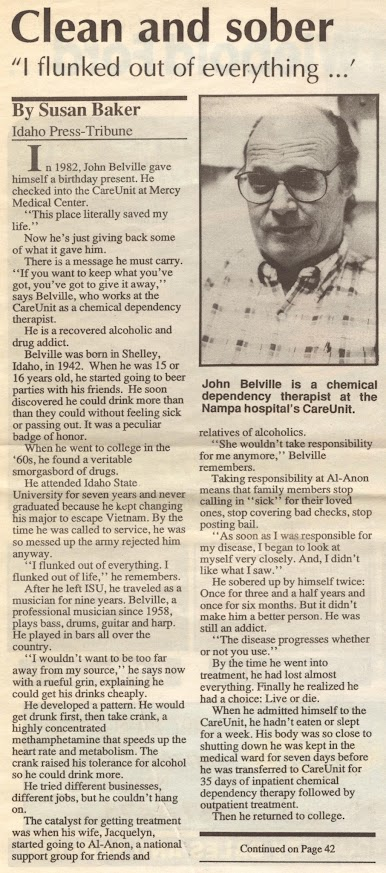
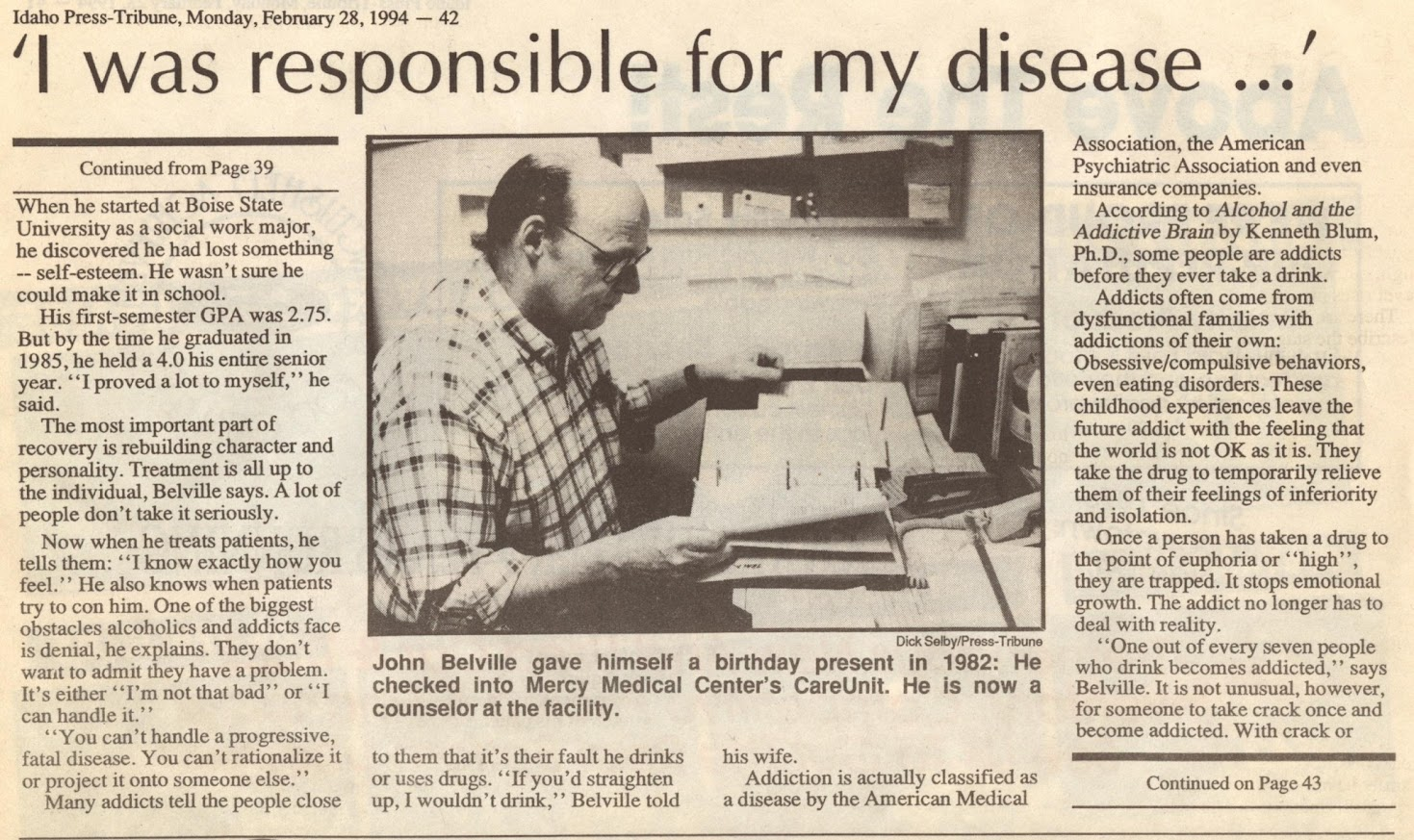
During my high school years, Dad was attending Boise State University, becoming the president of the Student Social Workers and earning his degree in Social Work. He graduated college when I graduated high school in 1985. It’s amazing to me that he went back to school after forty. He went on to work with developmentally disabled people for nine years before joining the staff at the Mercy CareUnit as a drug and alcohol rehab counselor. He helped hundreds, maybe thousands of people get clean and sober in the years he worked there before illness left him too disabled to work.
I told Dad how proud I was of him for all he had overcome, that I forgave him for any shortcomings he might have felt he had as a father. I told him how much I owe to him, my musical talents, my analytical mind, my dark sense of humor, my progressive principles, my silly nicknames, my terrible jokes, my love of the road. I told him I’d miss him at me and Lori’s wedding this September 21st and that I’m sad he couldn’t make the third special 60th following his birthday and anniversary, the 60th birthday of his oldest son.
It’s closing in on 10:00pm. I left Mom with Dad there in the bed, still breathing, gurgling, eyeballs fluttering, and made the thirty minute drive to my friend’s house in Nyssa, just over the state line in Oregon. She showed me to the small converted storage room she’d laid out for me and I quickly fell asleep, hoping my Dad was resting peacefully.
Day 30,741
I was awake at usual around 5:00am. During the night, I thought about how one of those little syringe bulbs you use to clear baby mucus might be useful for helping clear Dad’s mouth so he might breathe easier. I had already planned to run to the Ontario Walmart to log an hour or two of work before heading back to Nampa. If I can just work enough to cover the cost of the gas to get here and back, I thought, that should be enough.
I texted Mom first. She said Dad had rested through the night and was well-medicated. My brother Josh was in the chat, he was beginning his journey down Interstate 84 from Portland and should reach us by 3:00pm Mountain. Assured Dad was still with us, I went to the Walmart, bought the little snot sucker, made a few deliveries, and got back to Dad’s bedside by 7:15am.
He was not there. Elvis had left the building.
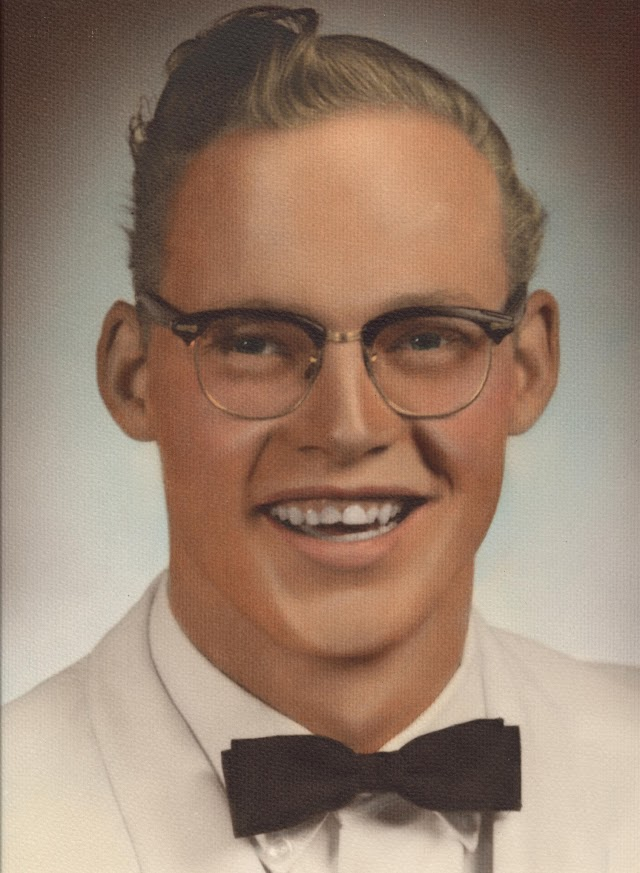
Oh, he was still breathing in that gurgling fashion, though slower with some pauses that would make me anxious each time. But that was just his body on autopilot. His eye sockets had completely sunken, giving his face a skull-like appearance. The eyeballs, so prominent against the stretched eyelids you could make out his corneas, were absolutely frozen.
Still, I laid beside him, took out the snot sucker, and kept draining his mouth of phlegm as his body went though its final shutdown. I thought about whether I should call Josh, to tell him not to hurry, that Dad wasn’t really here. I decided against it. If he could make it here while he’s still breathing, that’s something, I thought. I can’t take that from them.
Mom and Sam were there. I helped turn Dad’s body while they administered the morphine to him. Yesterday, he had winced and his forehead and eyebrows wrinkled at the application. This morning, he registered no reaction.
Then, at 10:05am, Dad made one last gurgled gasp and seized up. “Mom!” I shouted. She and Sam rushed in. Mom took his other hand, Sam by his knees, and with us surrounding him, he was gone on day 30,741 of his amazing life.
Once we gathered ourselves, Sam and I left Mom alone with Dad in the bedroom. Since she was eighteen years old, she had been sleeping by his side. It was then that I had realized that in this whole episode that began at 5:41am Pacific yesterday, I had not seen or heard my Mom cry.
“You’ll have to take care of your Mom,” Dad had written to me in an email a few years back contemplating his passing. “She’ll try to be all Jack Morris [her father, the strong silent John Wayne type] about it like it doesn’t bother her, but she’s going to be devastated.” If so, she was doing a remarkable job of not showing it.
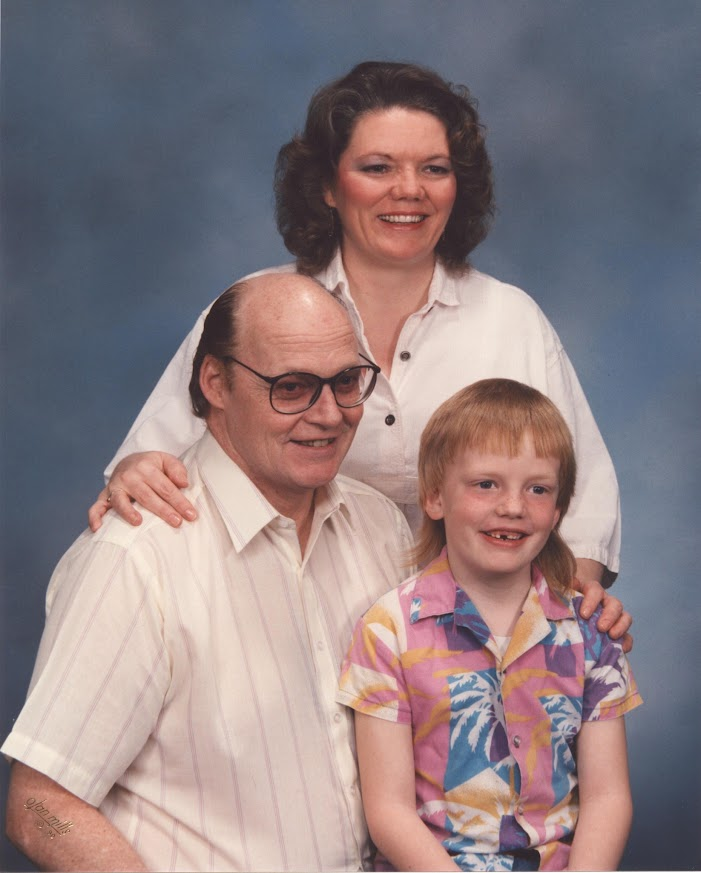
In fact, her concern wasn’t for herself and her husband of six decades dead in the bedroom. “Do you think we should call Josh,” she asked me and Sam. I had made that Portland to Nampa trip many times and knew that at this point he’s closer to us than Portland.
“Would you want to know,” asked Sam, “and then have to keep driving, or would you not want to know until you got here?”
Having faced that same dilemma while rebooting the car outside Wagontire yesterday, I told Sam, “Well, me being me, I’d want to know, because I’d pull over the car at that moment to take a picture of where I was when he passed, and then probably bawl.”
We called Josh. He’d just left one rest area and was miles away from the next one. He continued on and made it to Dad’s bedside at 3:26pm Mountain.
John Byron Belville’s Final Road Trip
Word had spread through the RV park that Dad was gone. He had many friends in this 55+ senior community. He and Mom had become so beloved there that when the longtime caretaker finally retired, the park hired Mom on to be the caretaker in exchange for free lot rent. My brother Matt had purchased the motorhome for them, so Mom is set for housing for the foreseeable future.
The hospice nurses attended to Dad’s body, getting him clean and ready for transport. Dad’s friend Beatrice had years earlier purchased cremation services for Mom & Dad as a gift. The facility had agreed to wait until 4:00pm to give Josh the time to be there.
We were caught a bit by surprise when a Marine sergeant in dress blues showed up. It turned out that park residents had learned that my Dad was a veteran and the Marine was there to give him final honors. It’s technically true—Dad’s a vet—but like me, we don’t make a whole lot of fuss about our service when so many others gave so much more. In my case, I was a National Guard bassoonist keeping America safe from Cold War Soviet musicians, I guess.
For Dad, he had enlisted in the Air Force as a way to keep from being drafted into the Army during Vietnam. He went through Basic Training and was a few months into his service when his persistent migraine headaches led to a medical discharge.
The hearse showed up, but the motorhome being as cramped as they are meant that myself, Josh, and the funeral director had to wrap Dad’s body in a sheet and haul him out of the motorhome onto the gurney and canvas body bag that lay atop it. We zipped it up while the Marine sought out a flag to use for our ad hoc ceremony, borrowing one from one of the neighbors in the park. It was placed somewhat haphazardly over the body, as the funeral director began placing it the wrong way and the Marine turning it correctly. One of the hospice nurses played a recording of “Taps” on her phone while the Marine saluted and Dad’s body was loaded into the hearse.
Now, as I said, I played in the Idaho National Guard’s 25th Army Band and served six years, reaching the rank of Sergeant (E-5). I played in many funeral ceremonies. I could give an entire seminar in what was done wrong here, as some insensitive Facebook commenter did when I made the mistake of making this video a public post.
But what was done right was that a community came out for a man they’d only recently come to know and an effort was made to pay military tribute to an airman who’d only given four months service and never expected any tribute for that. At a time when all his close friends and colleagues had long since left him, a whole new batch of strangers were attracted to his wit and wisdom to call him friend and see him on his last farewell.
When I think of one word to describe my Dad, it’s “indelible,” which if he were reading this aloud, he’d make a joke about being “inedible—and that’s a good thing!” My Dad left his mark on people. He counseled not just drunks and addicts at work; he was often sought by my teenage friends for advice. He always had a smile and a clever line to use on folks he’d meet in the service industry. He had a real talent for the abnormal psych it took to work in drug rehab, something I should have taken advantage of much more often in navigating the relationships in my life. I’m so grateful he got the last decade to see me finally content and in love with Lori.
If you met my Dad, you didn’t tend to forget him. As the hearse drove away, I knew that he’d be in my life for the rest of it. He saw my first breath, I saw his last breath. Having never had children of my own, it’s the most profound moment of my life.
The Rockin’ Johnny B is dead / Long live The Rockin’ Johnny B! Thanks for everything, Dad. I’ll watch after Mom.
Bluesky Discussion
View on Bluesky